Aluminum, Composite, or Faux Pillar: Which Mailbox Actually Holds Up
Three build types, three very different homes. How to match the material to your curb, your climate, and your budget.
 Dream Mailboxes Team
9 min readUpdated July 2026
Dream Mailboxes Team
9 min readUpdated July 2026
Three build types, three very different homes. How to match the material to your curb, your climate, and your budget.
Dream Mailboxes Team
9 min readUpdated July 2026
The short answer
Buy for your climate and how permanent you want it, not just the look. Aluminum is the clean, low-maintenance value pick. Composite is the best all-round balance of durability and looks. A faux pillar or stone box is the permanent, high-end statement, at the highest price and the most involved install.
Most people choose a mailbox the way they choose a doormat: by the picture. Then a few winters go by, the finish chalks, the door sags, and the thing that was supposed to lift the curb starts to drag it down. It's worth getting right, since curb appeal is one of the cheapest ways to lift a home's first impression, and the National Association of Realtors consistently ranks exterior projects among the highest for perceived value at resale. The fix is boring but reliable: decide where the box has to live and what it has to survive first, then pick the material that wins on those terms.
A curbside box has a job with rules attached. The U.S. Postal Service's mailbox guidelines expect the bottom of the box to sit a set height off the road and a set distance back from the curb face so a carrier can reach it without leaving the vehicle. Those dimensions are spelled out in the Postal Service's published mailbox standards (DMM 508). Get the placement wrong and delivery becomes the carrier's judgment call, which is not where you want your mail.
This matters more than it sounds for the heavier options. A post-mounted aluminum or composite box is easy to set at the right height (our install instructions walk through it). A masonry or faux-pillar surround is not something you nudge over three inches after it's cured, so its placement has to be right the first time.
Every material here has a home where it's the right answer and a home where it isn't. None of them is the best at everything.
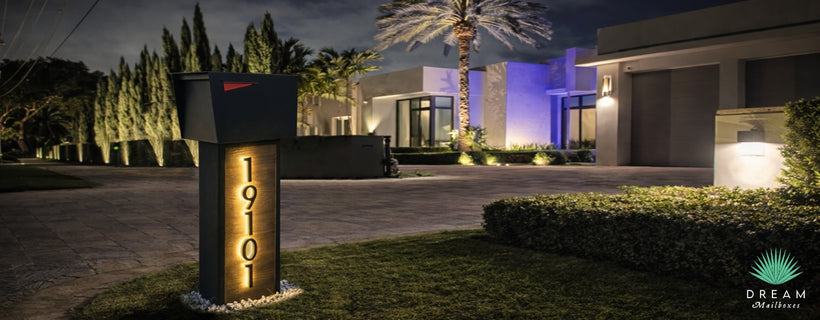
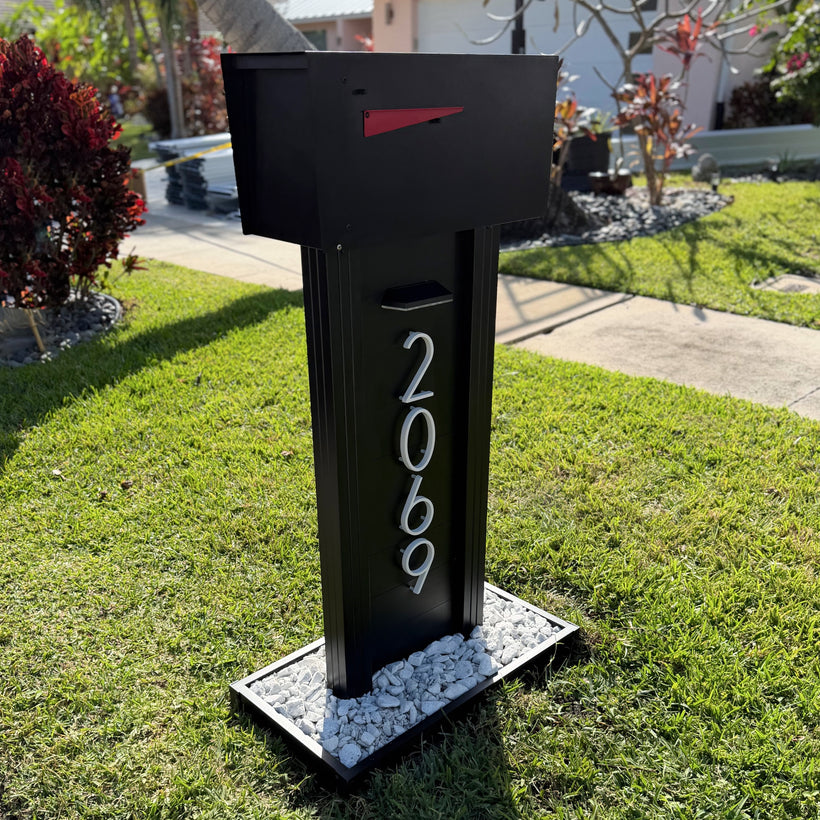
Powder-coated aluminum gives you crisp, architectural lines at the friendliest price. It doesn't rust, it shrugs off coastal air, and a post mount is a genuine weekend job. The honest limit is impact: a thin-gauge box can dent, and a dent on a flat modern face shows. On a heavier gauge with a quality coat, that's rarely an issue.
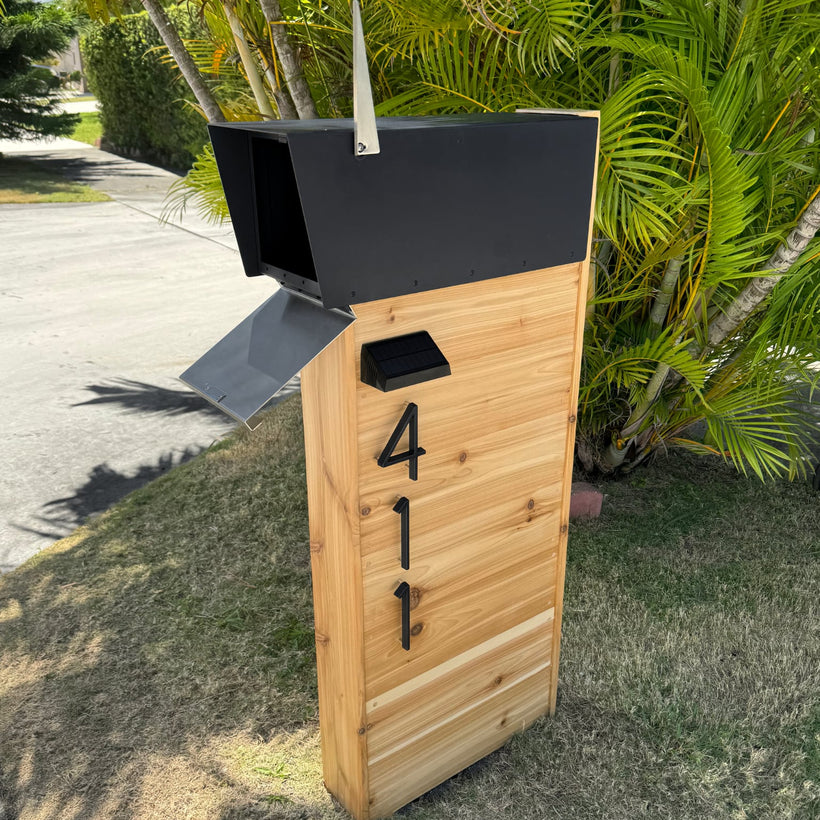
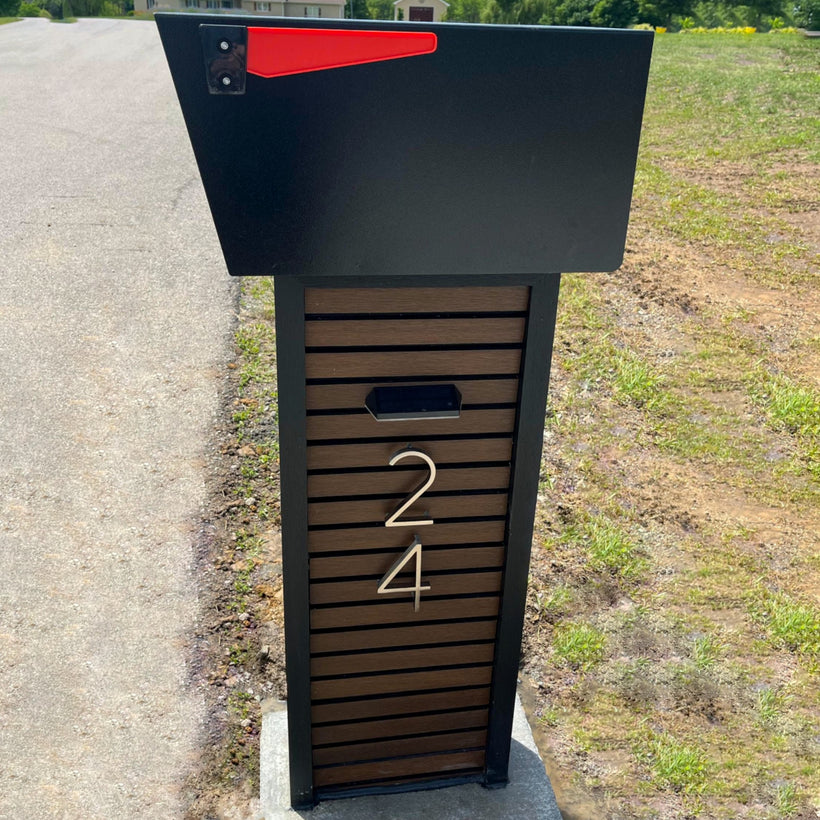
Composite is the quiet all-rounder. It won't rot, warp, or corrode, it holds color under UV, and it comes in warm wood-look and matte tones that read far more expensive than the price suggests. The one thing to verify is that you're buying true composite, not painted MDF or a printed look-alike, because those are the ones that fade and swell.
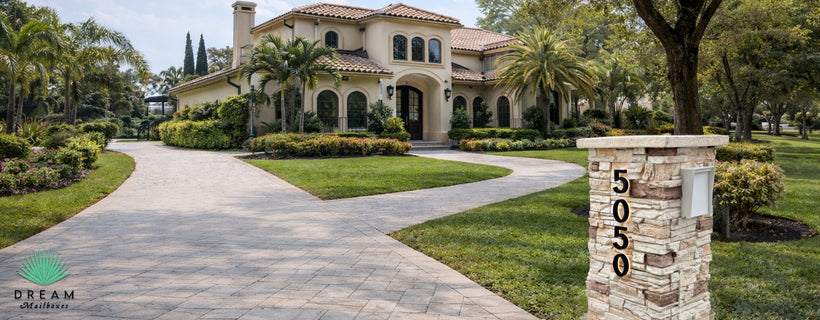
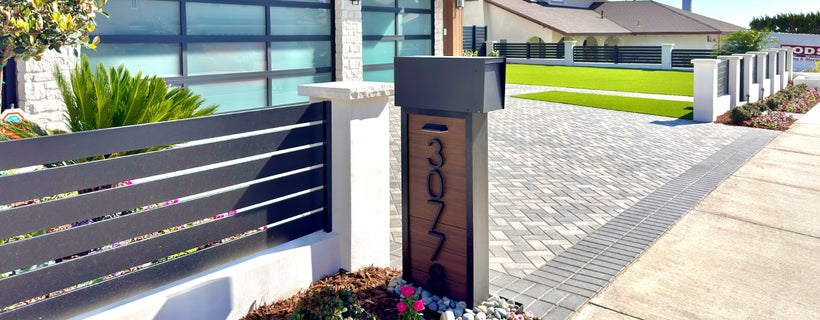
A faux pillar or stone surround is the box you install once and never think about again. It brings masonry presence to the curb, pairs with stucco and stone homes, and is effectively permanent. The trade is real: it's the priciest option, it's heavy, and it needs a proper base, so it rewards planning far more than impulse.
| Modern Aluminum | Best all-roundComposite | Faux Pillar / Stone | |
|---|---|---|---|
| Best for | Clean modern curb appeal on a budget | Balancing looks and longevity | A permanent, high-end statement |
| Durability | Won't rust; can dent on impact | Won't rot, warp, or corrode | Effectively permanent once set |
| Weather | Handles rain and coastal air | Sun, moisture, freeze–thaw | Unfazed by anything short of a car |
| Maintenance | Occasional wipe-down | Virtually none | None; the odd cleaning |
| Install | Post mount, DIY-friendly | Post mount, DIY-friendly | Needs a footing; plan ahead |
| Feel | Crisp, architectural, light | Warm wood-look or matte | Substantial, masonry presence |
| Price band | From ~$899 | Mid-range | Premium |
| Watch-out | Dents show on thin-gauge boxes | Confirm true composite, not MDF | Heavy; confirm placement first |
"Nine times out of ten, a mailbox 'fails' because of how it was mounted, not what it's made of."
— Dream Mailboxes install team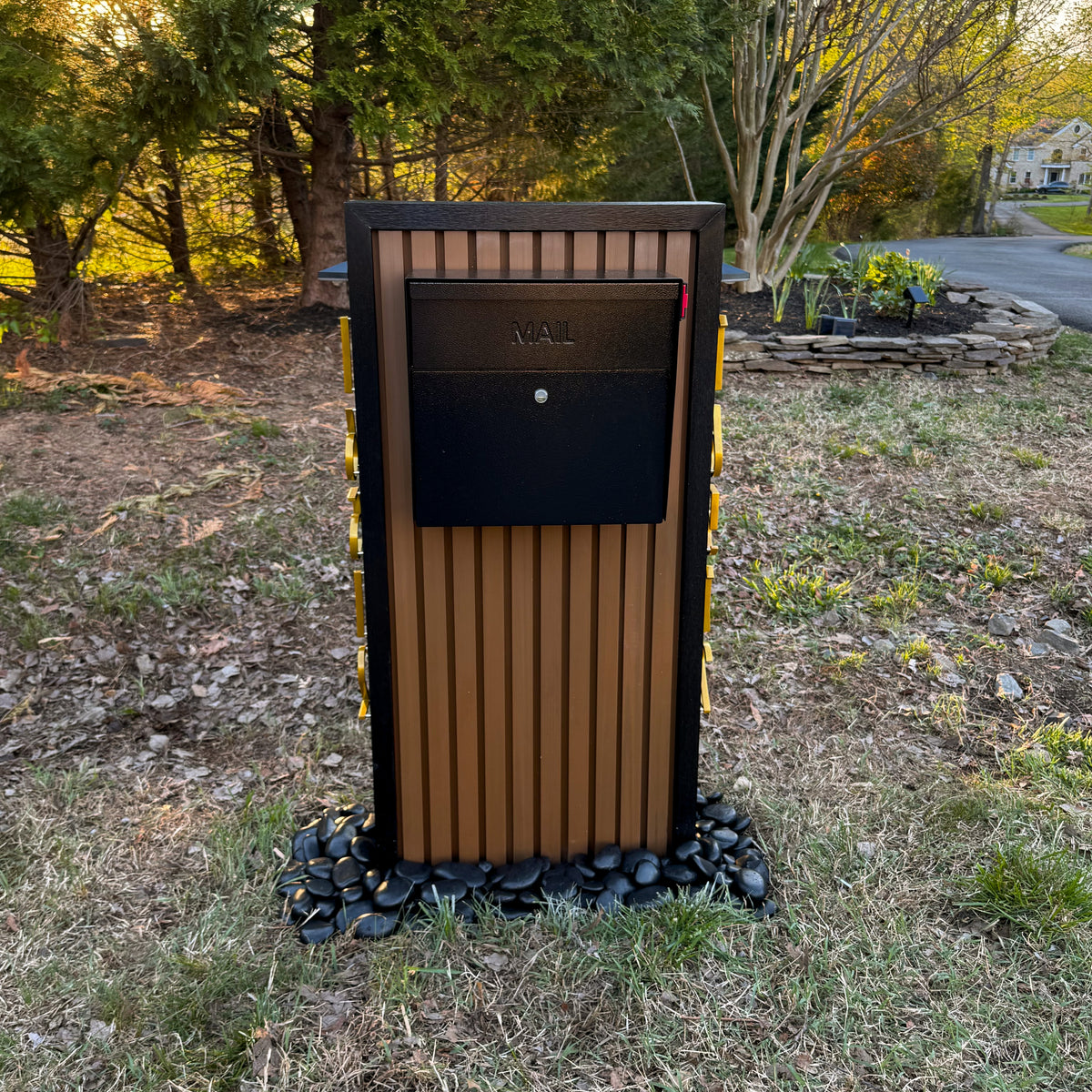
Narrow it in three questions. If the answer to "how long do I want to think about this?" is never again, and the budget allows, a faux pillar earns its keep. If you want the best mix of looks and durability without pouring a base, composite is the safe default. If you love clean modern lines and want the most curb appeal per dollar, aluminum wins.
Dream Mailboxes builds all three, so the honest recommendation is boring: pick the material that wins the questions above, then choose the finish you'll still like in five years. Not sure which fits your site? Talk it through with us before you buy.
Curbside mailbox designs are expected to meet USPS standards, and boxes from established manufacturers are built to them. The part that's on you is placement, height and setback from the curb, which applies no matter which material you choose.
Many HOAs regulate mailbox style, color, or require a specific post. Check your covenants before buying, especially for a pillar or stone surround, since those are the hardest to change after they're set. Our FAQ covers the questions we hear most.
No. Aluminum doesn't rust, and a quality powder-coat resists chipping and fading. It can dent under a hard enough impact, which is the one thing to weigh against its price and clean looks.
Quality composite is UV-stable and made to hold its color. The look-alikes that fade are painted MDF or printed panels, so confirm you're buying true composite before you judge the category.
Yes, but decide early. LED address lighting and larger locking parcel boxes are common add-ons, and both are easier when the wiring and base are planned before install rather than retrofitted after.
We design and build aluminum, composite, and faux-pillar mailboxes for homeowners who care how the front of the house reads. These guides come from questions our customers actually ask before they buy.
Everything to get right before the box goes in the ground.